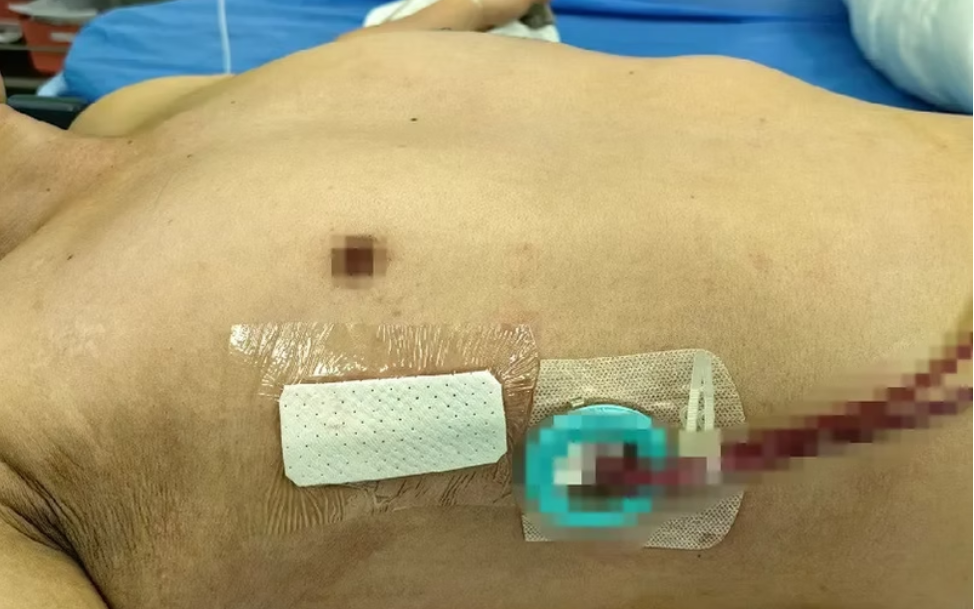
A barrel chest is a type of thoracic deformity characterized by a barrel‑shaped appearance. A normal thorax has a greater transverse diameter than anteroposterior diameter, while a barrel chest exhibits an abnormal increase in the anteroposterior diameter. This sign sometimes serves as a clinical indicator of underlying pathology, necessitating comprehensive diagnostic assessment.
Related Medical Conditions
Primary barrel chest is present since childhood, with unknown causes and usually no obvious symptoms.
Emphysema is a chronic obstructive pulmonary disease (COPD) and a common cause of secondary barrel chest. People who are affected have lungs that lose their elasticity and become chronically overinflated. Over time, this constant pressure inside the body pushes the rib cage out, thereby leading to barrel chest. Secondary barrel chest symptoms may include significant respiratory symptoms such as cough, chest pain, chest tightness, shortness of breath, and dyspnea. These symptoms are caused by underlying diseases.
Differentiating Structural and Functional Causes
It is essential to distinguish between skeletal deformities and respiratory adaptations. A primary deformity is frequently congenital, manifesting during physical development in the absence of lung disease. On the other hand, secondary types are physical changes that happen when someone has long-term breathing problems. A significantly enlarged rib cage can affect a patient’s physical comfort and mental health, regardless of the cause.
Clinical Solutions with a Focus
Treatment for barrel chest depends on its type. Primary barrel chest is primarily a cosmetic abnormality with no physiological harm. For patients seeking to improve their appearance, minimally invasive procedures can be performed. At the Institute of Chest Wall Surgery (ICWS) , the Wenlin procedure incorporates a variety of innovative techniques, including pre-shaping, which involves lifting or pressing the deformed bones with various instruments to prepare for subsequent steel bar shaping, reducing procedural difficulty and improving outcomes; and the Wang technique, which uses wires to directly fix both ends of the steel bar, instead of using additional short plates as in the Nuss procedure. This approach minimizes trauma, simplifies the operation, and enhances plate stability. The Wenlin procedure is therefore safe, simple, and minimally invasive.
Secondary barrel chest caused by chronic lung disease is a compensatory pathological change. Surgical correction of the chest wall is contraindicated, as it may worsen symptoms. Treatment should instead target the underlying lung disease.
Conclusion
The primary step in standardized diagnosis and treatment is to classify the types of barrel chest. The Institute of Chest Wall Surgery (ICWS) provides specialized care for individuals needing structural correction of the chest wall.
