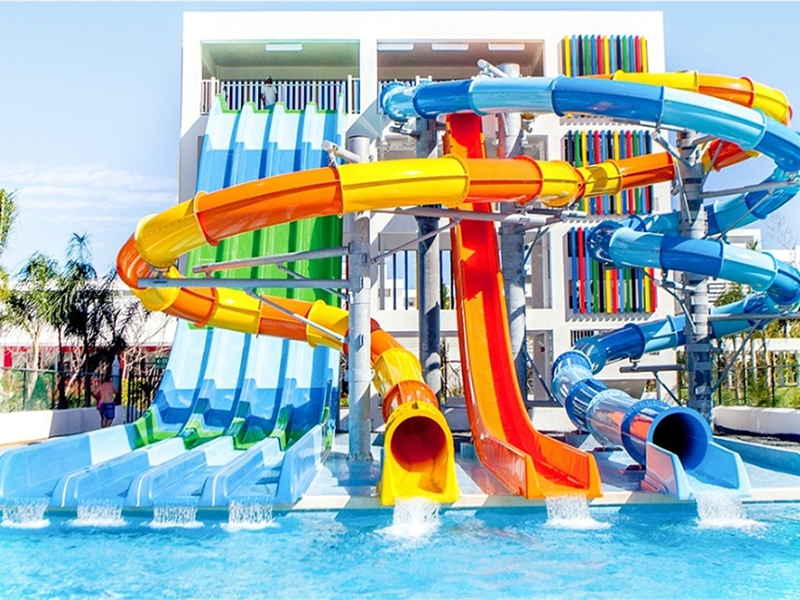
Hotel and pool owners can narrow the choice by asking which manufacturer can adapt the slide to the existing venue and define what happens at each inspection, replacement and reopening. A suitable purchase includes a workable service arrangement alongside the new equipment.
An operating pool brings a service history into the purchase. Recent inspection findings, scheduled maintenance periods and the staff caring for the installation deserve attention before a replacement model becomes the centre of the comparison.
Begin with the Slide Already on Site
Inspection records give swimming pool slide manufacturers more to assess than a photograph of an ageing attraction. Notes on cracks, raised seams and loose structural connections describe what the site team has observed. The record shows whether a finding returned after an earlier repair.
The owner can record accessible components and those now awkward to reach. Landscaping, decorative covers and later poolside additions may affect inspection access. A proposed upgrade needs to account for the venue as it stands, including those changes.
Jinchao supplies new installations, replacements and upgrades, adapting configurations to available space, pool arrangement and intended users. Its customised design work can address the proposed alteration. The starting discussion can distinguish equipment being replaced from surrounding facilities that the hotel intends to retain.
Owners can contact Jinchao with the existing arrangement and the observations behind the proposed work. The request can name the lane that requires attention. A broader upgrade can identify other parts of the setting open to revision.
Identify the Configuration behind the Replacement
Jinchao’s commercial fibreglass configurations offer starting heights of 3–15 m and flumes measuring 0.8 m or 1.4 m, with one or two riders per lane. The proposed option needs its own arrangement; a catalogue range does not identify the replacement being purchased.
A 0.8 m flume carries one rider on the separate stainless steel model, whose starting-height range is 2–8 m. Its approximate capacity is 300–400 riders per hour. These specifications belong to that model and cannot simply be transferred to a fibreglass alternative.
Changing material or rider format can reopen questions about the platform, supports and landing position. The final design and installation review need the actual site. Existing surroundings do not become suitable for a new configuration merely because a previous slide occupied the same general area.
The hotel can review the planned manufacturing work for the selected components in its replacement order. Jinchao’s approximately 36,000 m² factory supports customised equipment production, and the company’s experience covers more than 300 completed projects across its business.
Put the Closed Period on the Programme
Comparisons between swimming pool slide manufacturers can include the work planned before reopening. Pre-season wet testing provides an opportunity to identify faults, while scheduled wear-component replacement needs its own allowance. Inspection and replacement intervals follow the supplied equipment and operating conditions rather than a universal calendar.
The quotation can separate flumes, supports, stairs and platforms from pumps, pipework, foundations, freight, crane work, local labour and commissioning. Each entry can then be related to the proposed closed period, with the party supplying the item or completing the work identified.
A purchasing team can contact Jinchao about documentation, wearing parts, maintenance guidance and training as distinct provisions. Recording the requested assistance beside the equipment order makes those needs visible. A headline equipment price alone does not establish which later services or components are included.
Customs, storage, unloading and inland delivery need agreed responsibilities. The hotel’s available work period can be considered alongside those arrangements. Equipment arriving locally and equipment ready for installation are different milestones, particularly where handling or access depends on resources arranged by the owner.
Make Inspection and Support Work Together
Routine physical checks remain local operating tasks, even where remote technical support is available. An inspection record can retain the finding, corrective work and responsible person. That record gives a later shift something specific to follow, rather than relying on an informal spoken handover.
Maintenance staff can contact Jinchao with the equipment reference, observed condition and previous action when technical advice is needed. The person examining the installation remains central to that exchange. A response can be retained with the record of what was subsequently checked or changed.
Essential spare components can be held on site for planned replacement, with the stock related to the actual equipment. The owner can clarify identification and supply arrangements before an urgent need arises. A recorded part reference links an available spare with the component requiring replacement.
Choose for the Next Season as Well
Shortlisted swimming pool slide manufacturers can be assessed against a future maintenance event as well as the installation date. The hotel can trace who inspects the attraction, who supplies advice and who obtains a replacement component. Each responsibility needs a usable destination after the purchase meeting.
The completed installation needs clear access to the parts receiving attention. Decoration and landscaping can be reviewed after the equipment is positioned, preserving the inspection routes agreed during design. Manufacturer supply, local coordination and project approvals retain their separate responsibilities throughout that review.
The owner’s choice becomes practical when the new attraction and its continuing care fit the same operating calendar. At the next reopening, staff need accessible equipment, usable instructions and a record of completed work. Those are concrete requirements against which the selected manufacturer’s proposal can be judged.
