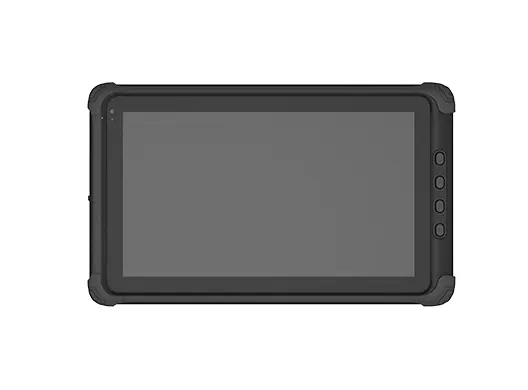
At a food-packaging line, the HMI is wiped down between batches and sprayed again at shift change. An IP65 panel pc may suit that setting, but a high-pressure washdown can change the requirement. Vantron’s all-in-one panel PC category shows why rating selection begins with the cleaning procedure, not a generic “rugged” label.
IP65 and IP69K both address ingress, but they describe different water tests. Your choice affects the front bezel, rear enclosure, cable entry, thermal path, service work, and qualification evidence. Treat the rating as one requirement in a complete panel PC specification.
What Do the IP65 and IP69K Digits Actually Mean?
An IP code describes protection against solids and water. The first digit is the solids rating: 6 means the enclosure is dust-tight under the relevant test. The second digit is the water rating. In IP65, 5 indicates protection against water jets. In IP69K, 9K indicates protection against high-temperature, high-pressure water jets under applicable test conditions.
That difference is about test exposure, not a simple quality scale. Equipment with an IP65 rating is tested for dust-tightness and water jets under specified conditions, but that rating may not be sufficient for every cleaning process. IP69K addresses a more severe washdown pattern, such as a food or beverage line cleaned with heated spray equipment. Your choice depends on how the equipment is cleaned, where the spray comes from, and how often the process occurs.
The code also has a boundary. It does not automatically describe corrosion resistance, chemical compatibility, impact resistance, sunlight readability, or thermal performance. A detergent, disinfectant, or caustic cleaner can affect seals and coatings even when the water-ingress rating appears suitable. Compare the test conditions and materials with your actual cleaning agents.
IP65 Fits Controlled Industrial Environments
IP65 is often a practical choice for a factory HMI beside a packaging machine, a warehouse pick station, or an indoor control cabinet exposed to dust and occasional splashing. It protects against dust ingress and water jets without automatically pushing every mechanical detail toward the most demanding washdown design. That can reduce integration complexity where high-pressure, high-temperature spray is not part of the process.
For a specific industrial panel PC model with an IP65-rated front panel, use in an outdoor kiosk or AGV service station may be considered only after the complete assembly, cable routing, drainage, and mounting arrangement have been qualified for the location. Check the enclosure behind the display, not only the glass or bezel. A front rating does not make the rear housing, connectors, cable glands, or cabinet cutout IP65 by implication.
The panel PC category describes fanless cooling, a waterproof and dustproof front panel, shock-resistant construction, and IP-rated environmental sealing. It also covers flexible display sizes, touch-panel types, I/O configurations, and mounting options. Those are useful starting points, but your procurement specification should identify the exact protected surfaces and installation method.
IP69K Changes the Washdown and Service Plan
IP69K becomes relevant when cleaning is a defined operating event rather than occasional housekeeping. Consider a panel PC mounted on a food-packaging line that is sprayed from several directions after a production run. Water pressure, temperature, nozzle distance, spray angle, and exposure time all matter. A rating selected without matching those conditions can create false confidence.
Designing for the water-exposure conditions specified by IP65 or IP69K can require tighter joints, controlled cable entries, and closer attention to seals around touch glass, buttons, vents, and mounting hardware.Those details can affect service access. They can also affect heat dissipation: a sealed fanless enclosure relies on its chassis and mounting surface to move heat away from the processor and display electronics. Fanless cooling stays within its thermal envelope only when the installation provides the intended heat path.
IP69K does not replace material review. A washdown area may use sanitizers, oils, salt, or cleaning compounds that attack elastomers, adhesives, coatings, or exposed metal. Validate the full cleaning procedure with the enclosure materials. Check whether the display remains readable, the touch layer accepts gloved or wet-hand input, and the mounting hardware can withstand repeated service cycles.
Ingress Protection Is Only One Part of Panel PC Selection
Start with the operator interaction. A QSR self-order terminal may need a cleanable surface and reliable multi-point PCAP touch, while a machine HMI may prioritize gloved input, physical controls, and readable status graphics. The industrial panel PC model configured with multi-point PCAP touch is intended for operation with wet or gloved hands, while its operating-system support should be checked at the individual model level rather than assumed across the entire category. Select the operating system around your application software, update process, and device-management model.
Next, review the installation boundary. An industrial panel pc can be mounted in a cabinet, machine door, arm, or recessed cutout, but the surrounding structure becomes part of the protection system. A gap at the cutout, an unsealed gland, or a connector facing a spray path can defeat a carefully selected front rating. Document the enclosure, gasket, cable, and mounting details as one assembly.
Lifecycle planning belongs in the same review. Vantron has worked in embedded computing for more than 20 years, employs over 200 research personnel from a variety of fields, and provides FAE technical support.For a medical cart, warehouse terminal, or fleet service station, ask how software images, replacement units, documentation, and product-lifecycle decisions will be handled over the program period. A panel PC rating does not solve a supply or maintenance problem by itself.
Choose the Rating From the Cleaning Procedure
Write the cleaning scenario before choosing the panel PC. Record whether the unit sees dust, splash, hose spray, heated high-pressure washdown, chemicals, condensation, or direct sunlight. Then inspect the whole installation: front and rear surfaces, connectors, cable glands, mounting cutout, cabinet, drainage, touch behavior, and thermal path. This gives procurement and engineering the same acceptance criteria.
Choose IP65 when your equipment faces dust and ordinary water jets, and the complete assembly can be protected through appropriate mounting and cable management. Choose IP69K when the equipment is intentionally exposed to high-temperature, high-pressure washdown and the supplier can substantiate that test against your cleaning process.
For an industrial panel PC program, the rating should follow the site procedure, not the other way around. Vantron’s engineers can also review custom OS, I/O, enclosure, or logo requirements around the selected panel PC. The final decision remains a system decision: qualify the rating, materials, installation, and service method together, then document the conditions that the finished HMI is expected to withstand. Vantron is one supplier example to include in that comparison.
