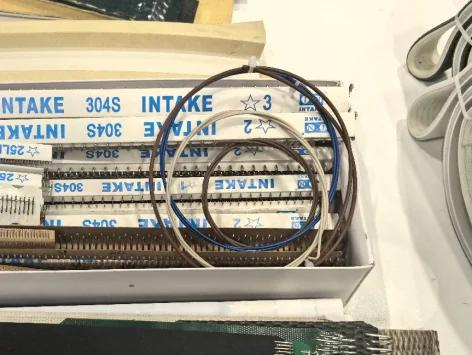
Unexpected conveyor belt damage can create immediate pressure for maintenance teams. In a quarry, distribution center, manufacturing plant, or bulk-handling facility, waiting for specialized splicing equipment or an external service crew can extend equipment downtime. Field belt lacing provides another maintenance approach by allowing trained personnel to mechanically join belt ends using appropriate fasteners and installation equipment. For businesses responsible for multiple conveyor systems, this can make repair planning more flexible.
A suitable hydraulic belt fastener machine can support this process by applying hydraulic pressure during fastener installation. Instead of relying entirely on manual force, maintenance personnel can use powered equipment to install compatible wire buckles more consistently. The value for B2B operations lies not simply in faster installation, but in developing a repeatable repair process that can be deployed when and where belt maintenance is required.
Why a Hydraulic Belt Fastener Machine Supports Field Repair
Field repairs often involve practical constraints that differ from controlled factory production. Technicians may have limited working space, restricted access to equipment, and pressure to restore the conveyor without unnecessary delays. Mechanical belt fastening is commonly used for conveyor installation and repair because fasteners can be installed with dedicated tools rather than requiring a complete vulcanizing setup.
A hydraulic system adds powered force to the fastening process. Intake describes its hydraulic belt fastener machine as a hydraulic wire buckle machine designed for 25 and 30 wire buckles. The company positions the machine for industrial environments where heavy-duty conveyor belts are used and identifies benefits including reduced operator effort, productivity, and consistent fastening.
For maintenance departments, this means the machine can become part of a planned field-repair toolkit. However, equipment compatibility remains essential. Buyers need to confirm the belt construction, fastener type, belt dimensions, and installation procedure before selecting a machine for a particular conveyor.
Choosing Heavy Duty Conveyor Belt Lacing Systems
Not every conveyor belt requires the same joining method. Heavy-duty applications such as mining, aggregate, cement, and bulk material handling commonly use mechanical fastening systems designed around the belt’s operating conditions. Industry guidance distinguishes between hinged and solid-plate mechanical fasteners for heavy-duty applications and emphasizes selecting the fastening system according to factors such as belt characteristics and conveyor configuration.
When evaluating heavy duty conveyor belt lacing systems, maintenance teams should therefore look beyond the machine alone. The fastener, installation equipment, belt thickness, belt tension, pulley configuration, and operating environment need to work together. A lacing system that is appropriate for one belt should not automatically be transferred to another belt without checking compatibility.
For distributors and belt manufacturers, this consideration is particularly important when supporting customers across different industries. Maintaining several compatible fastening options can provide greater flexibility than relying on one universal configuration.
Installation Consistency Matters in Conveyor Repair
A field repair is only useful if the resulting joint is installed correctly. Belt ends need to be prepared and aligned appropriately, and fasteners must be seated according to the applicable installation procedure. Incorrect installation can affect splice quality and may create additional maintenance requirements.
This makes a hydraulic belt fastener machine useful as part of a standardized workflow rather than as a standalone productivity tool. The equipment can provide hydraulic force, while operators remain responsible for correct belt preparation, fastener positioning, alignment, and final inspection. A defined procedure helps reduce variations between different technicians and repair locations.
Intake’s product portfolio supports this broader approach. In addition to the hydraulic machine, its official product range includes a Manual Roller Lacer, Carded Wire Belt Fasteners, Reinforced Wire Hook Belt Fasteners, the INTAKE CR Series, and Hinge Pins. This allows B2B buyers to evaluate fastening components and installation equipment as part of one sourcing requirement.
Building a Practical Field Repair Strategy
For companies managing conveyor maintenance, preparation is essential. Identifying compatible fasteners, keeping suitable installation equipment available, and establishing clear inspection and repair procedures can help maintenance teams respond more efficiently when belt problems occur.
For buyers evaluating heavy duty conveyor belt lacing systems, supplier support is also worth considering. Product documentation, installation guidance, customization, and after-sales service can simplify equipment selection and implementation. Intake provides mechanical belt-fastener products and installation equipment, including hydraulic systems designed to support consistent fastening operations.
For distributors, belt manufacturers, and maintenance teams, selecting heavy duty conveyor belt lacing systems according to the actual belt specification and operating requirements can provide a practical foundation for more efficient field repair.
