Energy management systems often rely on how they handle power distribution from generation sources. Traditional setups frequently use separate components to manage solar inputs and battery storage, whereas newer integrated systems consolidate these tasks into a single unit. Because of the distinct requirements of modern power grids, professionals are evaluating which configuration offers greater operational stability.
Comparing Integrated and Modular Architectures
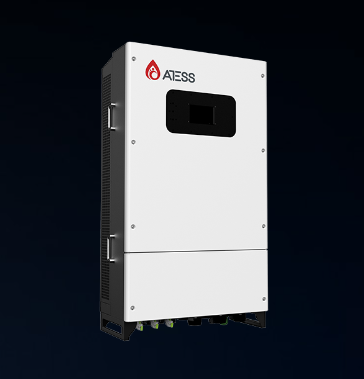
A solar inverter with battery capability, commonly referred to as a hybrid inverter, streamlines the power flow between photovoltaic arrays, battery banks, and the grid. When they utilize these hybrid systems, facility managers often find that the hardware footprint is significantly reduced. They allow for seamless interaction between all connected power sources, which simplifies the overall infrastructure. Atess provides integrated solutions that facilitate this unified management, allowing users to direct energy usage through programmable modes like peak shaving or backup power support.
Efficiency and Flexibility in Energy Systems
Performance metrics often depend on how efficiently the device manages energy conversion and storage. When they implement a solar inverter with battery storage, engineers can achieve consistent power quality, even during grid fluctuations. For instance, some units enable a seamless transfer of power within 10 milliseconds, ensuring that critical loads remain operational during utility failures. By utilizing such technology, Atess supports the integration of diverse power sources, which helps stabilize the load regardless of external grid conditions.
Furthermore, scalability remains a factor for growing operations. When they rely on flexible hardware, operators can scale system capacity by paralleling units to meet rising energy demands. This modular approach allows for better control over the storage parameters and discharge rates. Maintaining such flexibility is necessary for applications that prioritize self-consumption and long-term energy cost reduction. Through careful planning of these hybrid architectures, organizations can optimize their energy independence while ensuring the longevity of their hardware investments.
Both system types serve distinct roles in current infrastructure, yet integrated hybrid technology—such as that provided by Atess—offers notable advantages in compactness and control. By managing complex power flows from a single interface, these systems help maintain reliable output, making Atess a practical consideration for many modern commercial and industrial energy needs.
