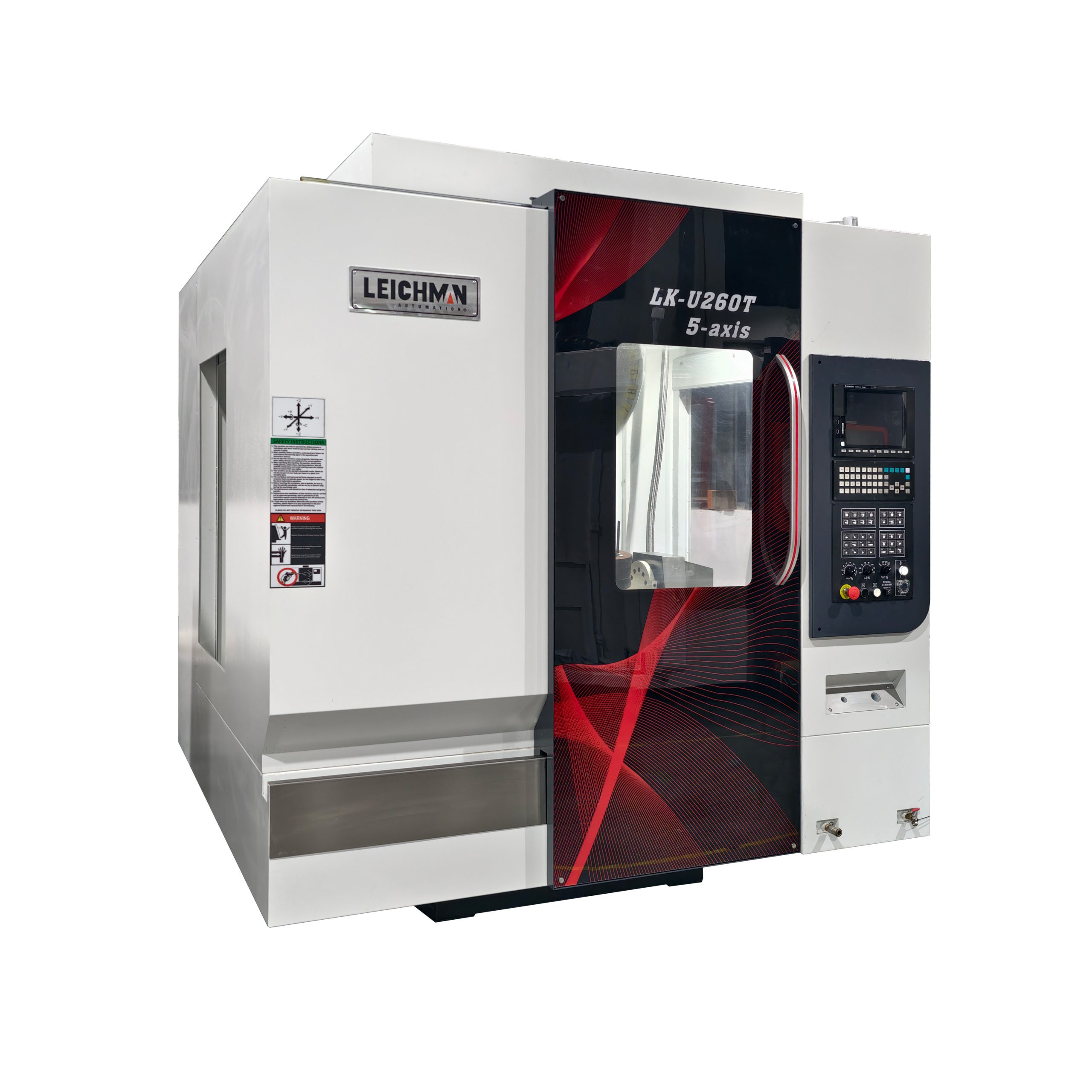
Managing 5-axis programming requires optimizing simultaneous tool paths, implementing collision simulation, and ensuring precise CAM post-processor compatibility. Multi-surface cutting paths, collision avoidance, and tool angle adjustments all require careful planning before machining begins. Many purchasing managers compare machine structure and software compatibility at the same time because programming issues can directly affect delivery schedules. For this reason, some buyers evaluating 5 axis CNC machining center manufacturers focus on CAM integration instead of spindle speed alone. Leichman supplies several multi-axis machining solutions for metal processing companies, including the LK-U260T model designed for compound surface machining and stable positioning during continuous operations.
CAM Compatibility and Workflow Stability
Selecting suitable CAM software depends on part geometry, operator experience, and production volume. Aerospace brackets, valve components, and medical parts often require simultaneous motion control that standard three-axis systems cannot support efficiently. In many factories, programmers reduce machining interruptions by choosing software with automatic collision simulation and post-processing support for a five axis cnc milling machine. Tool libraries and material databases also help shorten setup preparation. Companies working with overseas suppliers usually pay attention to after-sales communication because software adjustment frequently continues after machine installation. To support these situations, Leichman provides technical consultation and flexible service coordination for international equipment buyers handling customized processing tasks.
Practical Factors During Equipment Evaluation
Machine rigidity and software performance should be reviewed together during procurement discussions. A stable machine structure helps programmers maintain consistent cutting conditions when processing aluminum, stainless steel, or titanium parts with complicated contours. At the same time, operators still need clear programming logic to avoid excessive manual correction. Many factories comparing 5 axis CNC machining center manufacturers review whether the supplier can support non-standard fixtures, automatic tool calibration, and production line integration. The LK-U260T model uses a compact structure that supports multi-face machining within limited workshop space, which can help reduce secondary positioning procedures during batch production involving a five axis cnc milling machine.
Conclusion
Programming challenges in five-axis machining are closely connected to software selection, machine configuration, and technical support quality. Manufacturers and distributors often look beyond hardware specifications because stable machining also depends on workflow coordination and long-term maintenance response. When procurement teams compare processing solutions, they usually evaluate programming flexibility, spare part communication, and application support together. Leichman participates in these industrial projects by providing machining equipment options, customized coordination, and service support for global metal processing businesses.
