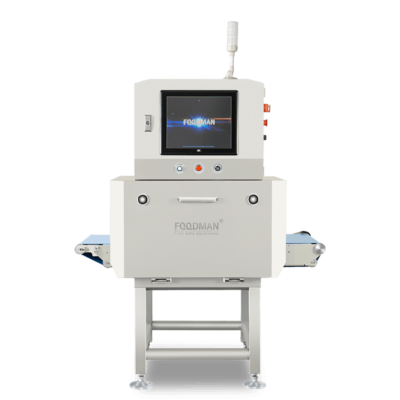
X-ray inspection is a type of inspection that is used by modern food manufacturers to identify structural problems, missing components, and physical pollutants in their products before they are sold in retail stores. Legacy metal detectors are typically insufficient for complex food matrices at a time when store obligations are becoming more stringent and regulatory standards are becoming more stringent.
By using ionising radiation to see into sealed containers, the use of a sophisticated X-ray machine closes this crucial operational gap. Across vast worldwide distribution networks, this technology safeguards consumer health and ensures total product integrity. During high-speed packing runs, these automated screening systems are relied upon by production supervisors to eliminate human inspection mistakes.
The Indispensable Value of Radiation Screening in Food Safety
Food safety verification requires sophisticated screening methods capable of identifying non-metallic hazards like industrial glass, stone, and calcified bone fragments.
Traditional metal detectors fail completely when products contain aluminum foil packaging or high-moisture conductive properties that mask foreign objects. Radiation-based systems bypass these operational limitations entirely by measuring local material density variations rather than electrical conductivity.
Consequently, quality assurance directors rely heavily on these advanced screening platforms to intercept dangerous foreign objects that standard magnetic sensors overlook completely. Intercepting these hidden hazards early protects corporate brand equity from catastrophic public recalls and costly consumer liability lawsuits in competitive commercial markets. Establishing robust inspection protocols satisfies the rigorous demands of international retailers and auditing bodies worldwide.
X-Ray Tube Generation and Physical Attenuation Mechanics
The physical screening process begins inside a heavily shielded generator housing containing a high-voltage X-ray tube. Electrons accelerate across a vacuum toward a heavy metal target, producing a focused, stable beam of high-energy photons. Collimator assemblies shape this emission into a precise fan-shaped path directed downward across the moving conveyor line.
During the processing phase, the tube voltage and current parameters are adjusted to correspond with the specified product densities without necessitating an excessive amount of electrical energy production. Systems that are designed and developed by Foodman provide consistent photon delivery and dependable beam geometry even when the production is operating continuously over multiple shifts.
Heat generated by operations is dissipated by the circulation of cooling fluids by thermal management systems. This helps to prevent hardware drift during extended production cycles. Because of this strong engineering, attenuation measurements are guarantyd to be constant across a wide range of product lines and temperatures in many different factories.
Linear Diode Arrays and Digital Image Formation
Once radiation penetrates the food item, residual unabsorbed photon energy reaches the lower detector assembly positioned beneath the conveyor. A high-resolution linear diode array converts incoming photons into measurable electrical signals, generating a continuous grey-scale map. Each individual photodiode contributes to a detailed internal profile representing local product density and packaging thickness variations.
While busy production schedules are in effect, these sensitive diode arrays are protected from the accumulation of moisture, grease, and food debris by optical windows that are kept clean. Signal amplification circuits allow for the enhancement of weak currents, which allows for the preservation of sharp image contrast despite variations in batch speeds and external temperatures.
The correction of tiny pixel variations through frequent calibration procedures ensures the stability of imaging over the long term without the need for operator interaction. The central processing unit receives these digital images in an instant thanks to the implementation of high-speed data links.
Algorithmic Recognition for Contaminants and Missing Components
Once the image is formed, advanced software algorithms analyze it for contaminants, structural flaws, and sealing anomalies. Specialized edge-enhancement protocols isolate tiny, irregular foreign bodies hidden deep within thick, complex food matrices. Parallel processing units evaluate multiple lanes simultaneously without sacrificing factory throughput speed or image resolution.
Software deployed on an X-ray machine adapts automatically to subtle product variations without requiring manual operator recalibration. Neural network models improve classification accuracy by evaluating historical defect data across diverse production runs.
Real-time statistical logging tracks frequency patterns, allowing plant engineers to identify and correct upstream machinery wear before widespread contamination occurs. Automated data archiving ensures complete traceability during external quality audits.
Packaging Line Integration, Safety Interlocks, and Sanitation
Beyond detection and rejection, the system must also integrate safely with the surrounding industrial production environment. High-speed pneumatic pushers or air-blast manifolds divert contaminated items into secure bins based on precise encoder tracking.
Heavy lead curtains contain radiation safely within the enclosure during active high-speed manufacturing shifts. Units supplied by Foodman feature intuitive touchscreen interfaces for rapid product changeovers and comprehensive data logging.
Hygienic structural design ensures that washdown procedures meet strict sanitary standards in harsh food processing plants. Sloped stainless steel frames and toolless belt removal prevent bacterial accumulation and facilitate rapid daily sanitation cycles.
Safety interlock switches immediately halt generator emission if access doors open during active line operations. Deploying a reliable X-ray machine backed by Foodman Vision guarantees long-term compliance and uncompromised food safety standards worldwide.
Robust construction materials withstand aggressive chemical sanitization agents without compromising structural integrity.
